Packages
Packages
Filters
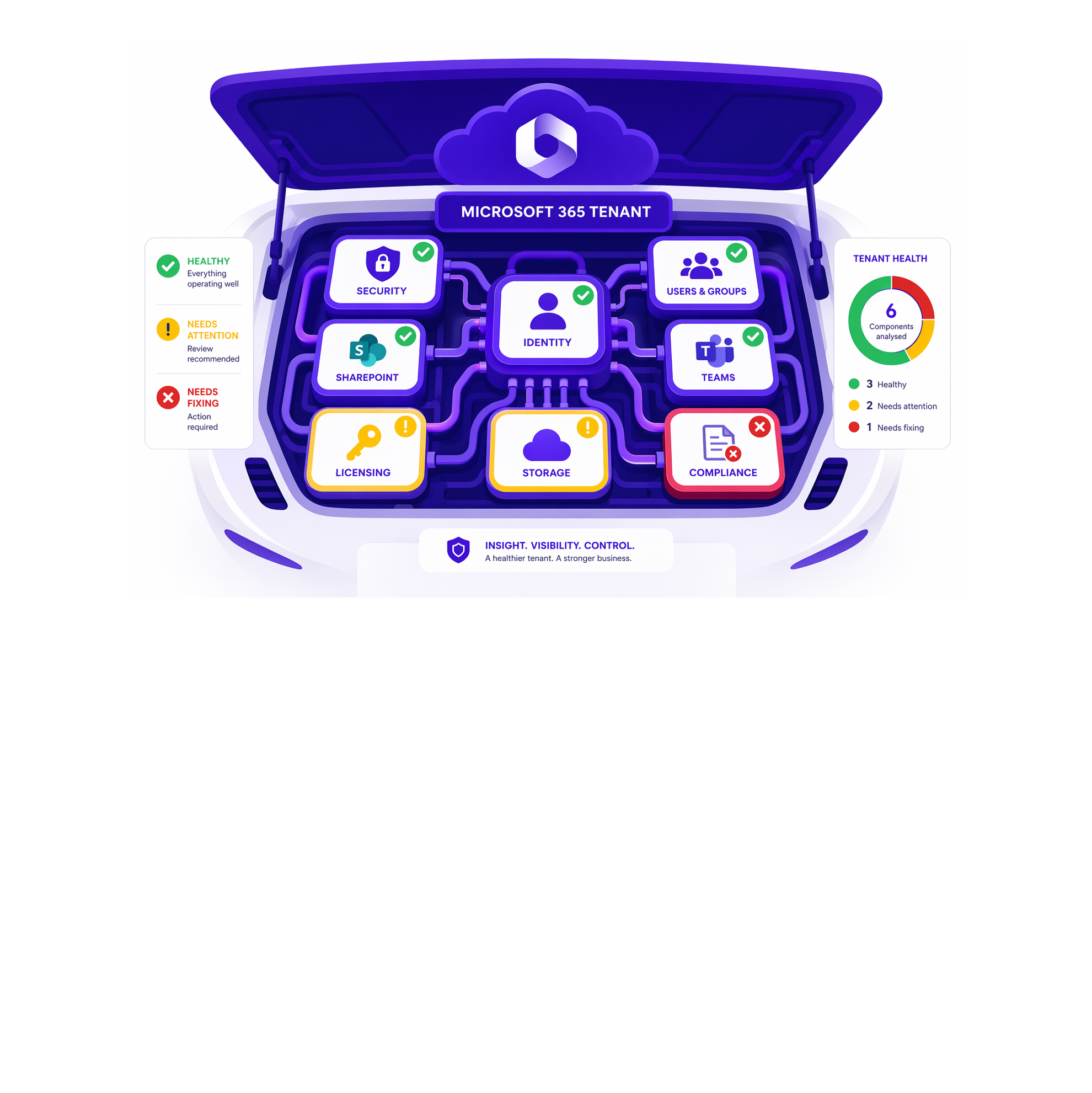
Most organisations using Microsoft 365 are getting a fraction of what they're paying for. Not because the tools aren't capable, but because the environment was set up quickly, never properly reviewed, and has quietly accumulated problems ever since — duplicate files, inconsistent permissions, unused licences, tools overlapping with each other, and ways of working that made sense at the time but no longer do.
The M365 Health Check gives you a clear, honest picture of where you stand — and a practical starting point for making things better.
Why it matters
Microsoft 365 isn't a static tool. It evolves constantly, and so does the organisation using it. What was set up two or three years ago may no longer reflect how your team works, what your security requirements are, or what Microsoft now makes possible.
Without a periodic review, problems accumulate invisibly. Sensitive documents end up accessible to people who shouldn't see them. Licences are paid for that nobody uses. Teams channels multiply without structure. SharePoint becomes a place where files go but never get found. And the gap between what you're paying for and what you're actually getting quietly widens.
A Health Check stops that drift — and often identifies quick wins that save time and money immediately.
What we look at
We review your Microsoft 365 environment across six areas:
Licensing — are you paying for the right licences, and are they all being used? We identify where you're over-licensed, under-licensed, or paying for capabilities that are duplicated elsewhere.
Security and permissions — who has access to what, and is that appropriate? We check for overly broad permissions, guest access that's no longer needed, and gaps in your basic security configuration.
Information architecture — how is information organised across SharePoint, OneDrive, and Teams? We assess whether your structure supports how people actually work or creates friction and confusion.
Collaboration and communication — are Teams, SharePoint, and the rest of the suite being used consistently and effectively, or has adoption drifted? We identify where tools are underused, duplicated, or working against each other.
Governance and compliance — are retention policies in place? Is sensitive data being handled appropriately? We flag areas where your current setup may create compliance or data governance risk.
Quick wins — we always identify the changes that can make an immediate practical difference, so you leave with actions you can take straight away as well as a longer-term picture.
What you receive
A short, clearly written report — no jargon, no lengthy technical appendices — covering what we found, what it means in practice, and what we'd recommend doing and in what order. Prioritised so you know where to start, with an honest assessment of what's straightforward to fix and what requires more considered planning.
The report is yours to use however you choose — to act on yourself, to brief an internal IT resource, or as the basis for a wider piece of work with us if that's the right next step.
How it works
The Health Check is delivered entirely remotely. We'll need read access to your Microsoft 365 admin centre for the duration of the review — we'll walk you through exactly what that involves and how to set it up safely. No software installation is required on your side, and access can be removed as soon as the review is complete.
The process takes a day of our time. We'll agree a date, complete the review, and deliver the written report within three working days. The whole thing from booking to report typically takes less than two weeks.
There is no obligation to take any further work with us. The Health Check stands entirely on its own.
Who it's for
The M365 Health Check is right for you if:
You've had Microsoft 365 for more than a year and it's never been properly reviewed. You've grown as an organisation and your setup no longer reflects how you work. You're planning a wider technology or process improvement project and want a clear baseline before you start. You've had a staff member leave and you're not confident permissions and access were properly cleaned up. Or you simply want to know whether you're getting value from what you're paying for.
It works equally well for small businesses, charities, and social enterprises — any organisation running Microsoft 365 that wants an honest, independent assessment of where things stand.
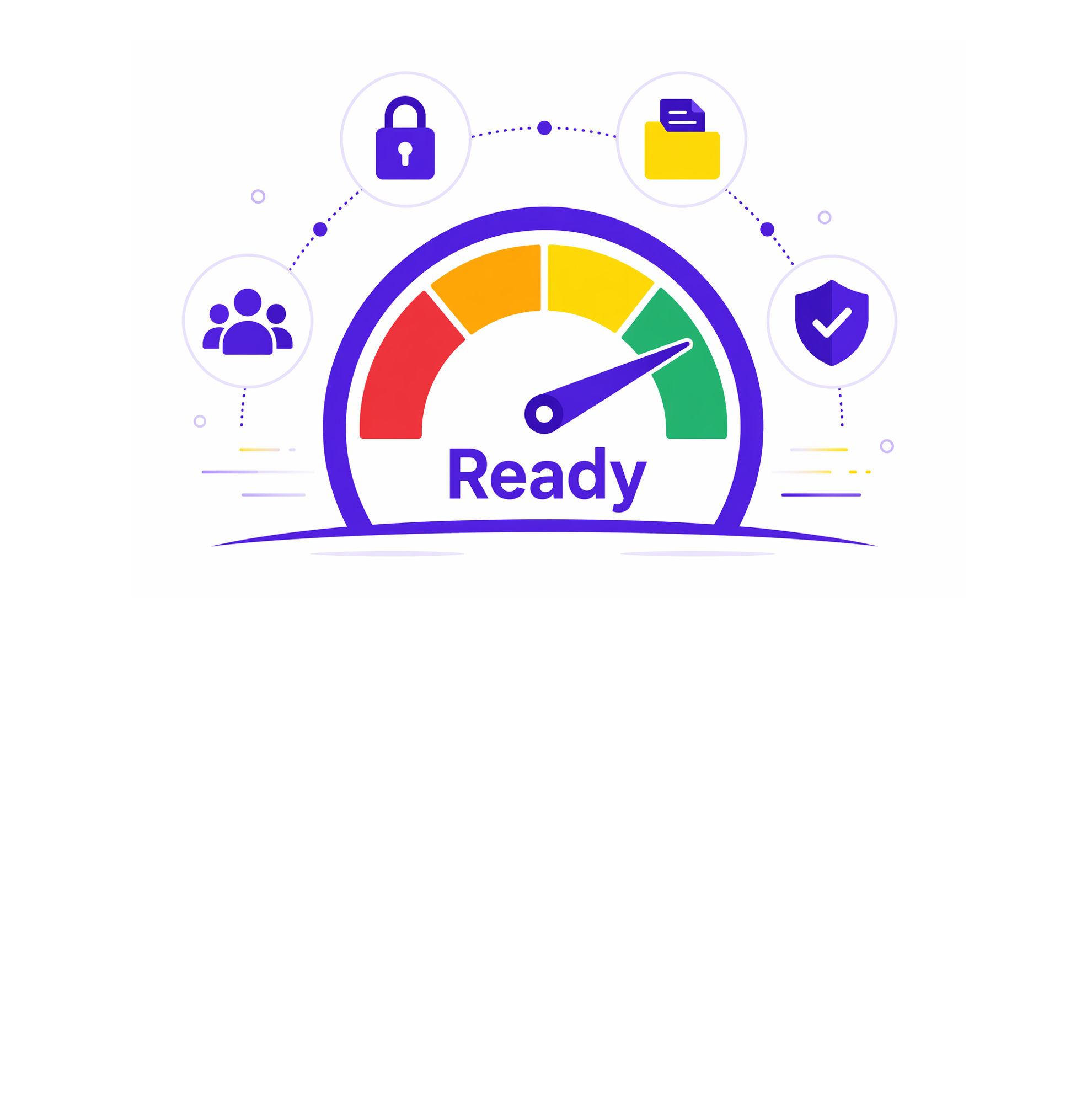
Microsoft Copilot is one of the most talked-about tools in the Microsoft 365 suite right now — and with good reason. When it works well, it saves significant time, surfaces information that would otherwise take hours to find, and removes a class of repetitive tasks that drain knowledge workers every day.
The question isn't whether Copilot is worth having. For most organisations, it will be. The question is whether your organisation is ready for it — and that's a question worth answering honestly before you spend the money, not after.
The Copilot Readiness Review gives you a clear, independent assessment of exactly that.
Why readiness matters
Copilot works by reasoning across your organisation's data — your emails, documents, Teams conversations, SharePoint files, calendar, and everything else stored in Microsoft 365. That's what makes it powerful. It's also what makes the state of your environment so important.
In a well-governed Microsoft 365 environment, Copilot is genuinely impressive. It finds things quickly, drafts accurately, and helps people work faster. In an environment where documents are scattered, permissions have drifted, and governance hasn't kept pace with how the organisation has grown, Copilot will work just as confidently — but the answers it gives will only be as good as the information it can find. And occasionally it will surface something it probably shouldn't, because the permissions that were supposed to restrict access were never quite right.
Copilot doesn't create governance problems. It makes existing ones visible — at the moment someone asks a question, which is not the ideal time to discover them.
Getting your environment ready before you deploy isn't a bureaucratic step. It's what separates organisations that get real value from Copilot from those that find it underwhelming or, worse, embarrassing.
What we assess
We review your Microsoft 365 environment across five areas that directly affect how safely and effectively Copilot will work:
Data organisation and findability — is your content stored in a way that Copilot can navigate intelligently? We assess whether your SharePoint and OneDrive structure supports or hinders effective AI-assisted search and retrieval.
Permissions and access control — does the right information reach the right people, and only the right people? We identify where permissions have drifted from what was intended and where sensitive content may be more broadly accessible than it should be.
Data governance and retention — are retention policies in place and working correctly? We check whether outdated, duplicate, or sensitive content is being managed appropriately — or whether it's sitting in your environment waiting to be surfaced at the wrong moment.
Process readiness — Copilot works best when the processes around it are clear and consistent. We assess whether your current ways of working support effective Copilot use, or whether process improvements are needed first to get real value from the tool.
Licence and deployment readiness — do you have the right Microsoft 365 licences for Copilot, and is your tenant configuration ready for deployment? We confirm what's in place and what needs to be resolved before you go live.
What you receive
A clear, jargon-free written report covering what we found across each of the five areas, what it means for your Copilot deployment, and a honest recommendation: whether you're ready to proceed, what needs to happen first if you're not, and in what order we'd suggest tackling it.
The report includes a simple readiness summary — a straightforward assessment of where you stand across each area — so you can see at a glance what's in good shape and what needs attention. No technical jargon, no lengthy appendices. Just a clear picture and a practical next step.
The report is yours to use however you choose — to act on independently, to share with your IT provider, or as the foundation for a deployment project with us if that's the direction you want to go.
How it works
The Copilot Readiness Review is delivered entirely remotely. We'll need read access to your Microsoft 365 admin centre for the duration of the review — we'll walk you through exactly what that involves and how to set it up safely before we begin. No software installation is required on your side, and access can be removed as soon as the review is complete.
The review takes half a day of our time. We'll agree a date, complete the assessment, and deliver the written report within three working days. From booking to report, the whole process typically takes less than two weeks.
There is no obligation to take any further work with us. The review stands entirely on its own — and if the honest answer is that you're not ready yet, you'll know exactly what to do next and why.
Who it's for
The Copilot Readiness Review is right for you if:
You're actively considering Microsoft Copilot and want to know whether now is the right time to deploy. You've already purchased Copilot licences but haven't rolled it out yet and want to make sure you're set up for success. You've started a Copilot deployment and it isn't delivering the value you expected. You're concerned about data governance or permissions in your Microsoft 365 environment and want an independent view before introducing an AI tool. Or you simply want an honest, practical answer to the question "are we ready?" before committing further.
It works equally well for small businesses, charities, and social enterprises — any organisation running Microsoft 365 that is serious about using AI effectively and responsibly.
A note on timing
Microsoft is actively developing Copilot and its capabilities are expanding regularly. The organisations that will get the most from it over the next two to three years are the ones that get their foundations right now — not the ones that deploy quickly and spend the following months managing the consequences.
A day of preparation is a small investment against the cost of getting it wrong.
Most organisations don't have an intranet problem. They have an information problem — and an intranet, done properly, is one of the most effective ways to solve it.
A well-designed SharePoint intranet gives your team one reliable place to find what they need: company news, policies, team spaces, useful tools, and the information that used to live in someone's inbox or on a shared drive nobody could navigate. Done well, it reduces the questions people ask each other, speeds up how new starters get up to speed, and creates a shared sense of how the organisation works and what it stands for.
Done badly — or not done at all — it becomes another place where things get lost.
We design and build SharePoint intranets that reflect how your organisation actually works, not how a generic template assumes it does. And we do it in three clear phases, so you know exactly what's happening, what it costs, and what you'll have at the end of each stage.
Phase 1 — Scoping
Before anything gets built, we spend time understanding your organisation — how information currently flows, what your team needs to find and when, and what a successful intranet looks like for your specific situation.
This phase involves conversations with the people who'll use the intranet most, a review of your existing Microsoft 365 environment, and a clear picture of what content you have, what needs creating, and what can be retired. We'll look at your current SharePoint setup, your Teams structure, and how the two relate to each other.
At the end of Phase 1 you receive a scoping document covering the proposed intranet structure, the key pages and content areas, the permissions model, the build approach, and a clear timeline and cost for Phase 2. Nothing moves forward until you've reviewed it, asked questions, and are happy with the plan.
Phase 1 is priced separately so that if the scoping reveals the project isn't right for your organisation at this point — or that the scope is different from what you expected — you haven't committed to a full build. We'd rather tell you that honestly at the start than discover it halfway through.
Phase 1 investment: Includes discovery conversations, environment review, and full scoping document.

Most organisations don't have an intranet problem. They have an information problem — and an intranet, done properly, is one of the most effective ways to solve it.
A well-designed SharePoint intranet gives your team one reliable place to find what they need: company news, policies, team spaces, useful tools, and the information that used to live in someone's inbox or on a shared drive nobody could navigate. Done well, it reduces the questions people ask each other, speeds up how new starters get up to speed, and creates a shared sense of how the organisation works and what it stands for.
Done badly — or not done at all — it becomes another place where things get lost.
We design and build SharePoint intranets that reflect how your organisation actually works, not how a generic template assumes it does. And we do it in three clear phases, so you know exactly what's happening, what it costs, and what you'll have at the end of each stage.
Phase 2 — Design and Build
With the scoping document agreed, we build your intranet. A typical build includes:
Homepage — a clean, welcoming landing page that gives your team an at-a-glance view of what's happening, where to go, and what's new. News, quick links, and key information presented clearly without clutter.
Department or team spaces — structured pages for each area of the organisation, with consistent layouts and clear ownership so content stays current and useful rather than accumulating and going stale.
Document libraries — well-organised, consistently named, with permissions that reflect who needs access to what. A single reliable home for policies, templates, forms, and reference documents.
Navigation — a logical, simple navigation structure that makes it easy for anyone to find what they need without having to know where it's been filed.
News and communications — a simple publishing process so that whoever is responsible for internal communications can post updates without needing technical knowledge.
Search configuration — making sure the right content surfaces when people look for it, and that the search experience reflects your content structure rather than fighting against it.
We work iteratively during the build — sharing progress, gathering feedback, and refining as we go rather than disappearing for six weeks and presenting something finished. By the time we hand over, your team has already seen it, shaped it, and is familiar with how it works.
All content migration, permissions configuration, and staff guidance is included. We don't hand over a shell and leave you to populate it.
Phase 2 investment: from £1,800 Final price confirmed in the Phase 1 scoping document based on agreed scope.

Most organisations don't have an intranet problem. They have an information problem — and an intranet, done properly, is one of the most effective ways to solve it.
A well-designed SharePoint intranet gives your team one reliable place to find what they need: company news, policies, team spaces, useful tools, and the information that used to live in someone's inbox or on a shared drive nobody could navigate. Done well, it reduces the questions people ask each other, speeds up how new starters get up to speed, and creates a shared sense of how the organisation works and what it stands for.
Done badly — or not done at all — it becomes another place where things get lost.
We design and build SharePoint intranets that reflect how your organisation actually works, not how a generic template assumes it does. And we do it in three clear phases, so you know exactly what's happening, what it costs, and what you'll have at the end of each stage.
Phase 3 — Ongoing Support and Continuous Improvement
An intranet isn't a project with an end date. It's a living part of how your organisation works — and like anything living, it needs occasional attention to stay healthy.
Phase 3 is a light-touch ongoing support arrangement for organisations that want someone they trust keeping an eye on things after the build is complete. That includes:
Quarterly reviews — a short check-in to assess what's working, what's gone stale, and what needs updating as the organisation changes.
Governance and permissions checks — making sure access remains appropriate as people join, leave, and change roles.
Content and structure updates — adding new pages or sections as your organisation grows, updating navigation as needs change, and retiring content that's no longer relevant.
Microsoft 365 updates — SharePoint evolves regularly; we monitor changes that affect your intranet and advise on anything worth acting on.
On-demand support — for questions, small changes, and the occasional thing that isn't working as expected. Available by email with a response within one working day.
Phase 3 is entirely optional. The intranet we build in Phase 2 is yours — fully documented, with guidance for whoever manages it internally. Some organisations prefer to manage it themselves after handover, and we'll make sure they're equipped to do that. Others prefer the reassurance of knowing someone is available. Either is fine.
Phase 3 investment: from £95 per month Minimum three-month arrangement. Scope and hours confirmed at handover.
No results found
No results match your search. Try removing a few filters.